

Small changes can deliver outsized impact.
What distinguishes human beings from the rest of the species? Apart from the ability to make stories as beautifully explained by the leading Thinker Yuval Noah Harari, it is the desire for progress. Progress means making things better, step by step. Each improvement, no matter how small, contributes to higher productivity, reduced effort, and greater satisfaction - key drivers of sustainable business growth.
This is what the Industrial Revolution brought us: no more horse-drawn carriages with low speed and limited comfort, but cars that offered greater comfort, faster speeds, longer distances, meeting all the conditions of progress. The ongoing digital does the same but at a different level – no more snail mail, visiting banks or post offices, fewer errors, and much higher speeds. While revolutions are about mega changes over a short period of time, human beings have always been driven to make things better on a daily basis. These incremental changes are no less important than they lead to revolutions that transform human life.
For any change to work, it is vital that it offers a clear economic benefit, as the input should have a lower value than the output for it to be adopted and sustained. It needs to be embraced by the business world to either create better value for its customers, reduce effort/costs, improve speed and productivity, or all of the above.
When we talk about technology, we often refer to the digital space, e-solutions, CRM systems, and AI. What we often overlook are the basic tech changes that make our world better, as much or more – for example, shifting to LED lighting that saves 90% energy, BLDC fans vs conventional AC fans that save 65% energy, or a mundane cleaning process that needs less water by design.
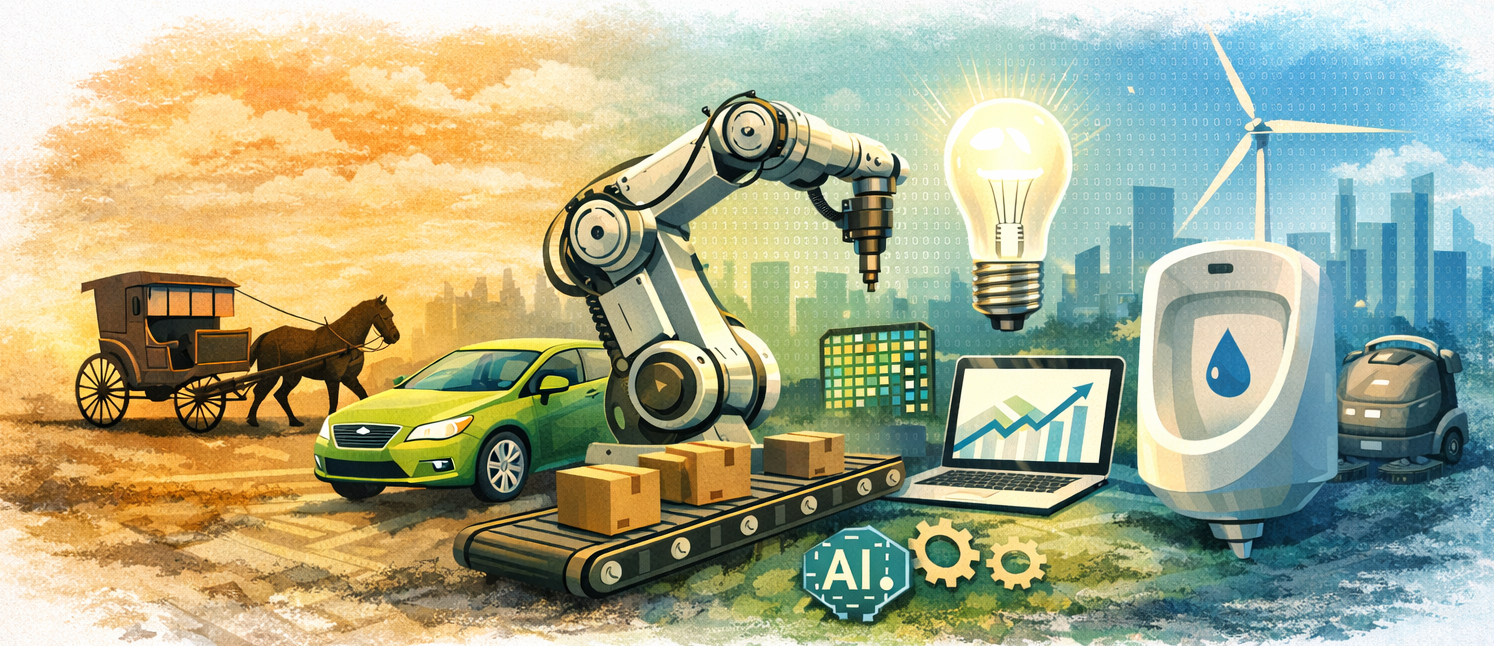
I experienced both kinds of tech making huge changes up close and personal during my stint with Diversey, a company that uses technology to make hygiene and cleaning simpler, more productive, and sustainable, with greater dignity for the user.
Diversey is in the business of professional hygiene delivery (chemicals, dosing systems, machines, robots, training, certification – the entire gamut), prima facie a boring business. How do you find value in something as mundane as cleaning? How do you get the attention of the CEOs in your customer settings? By creating an impact that matters to him. Which process is used for cleaning a urinal has no interest for the CEO, but the environmental impact of water reduction and the help in achieving sustainable targets will.
Sustainability has been at the core and key driver for the business at Diversey. The idea has been to eliminate/reduce the need for water or energy at the source itself, rather than play with tools like water recharging to claim water neutrality, or shift to so-called green energy or electric cars, which just shift the footprint to another point.
I can share many examples of how technology came to the fore to improve things. The first one that comes to my mind is adaptation to waterless urinals. Although the concept is not new, what was new in this case was the ability to convert any men’s urinal into a waterless one. The problem with conventional waterless urinals has been the abuse of enzyme tablets, and to overcome this, we converted the tablets into a liquid spray that is applied periodically, along with non-pathogenic live bacteria that can grow in the drains to become self-sustaining. Nothing great, but the outcome was phenomenal. This is just 1% of the Indian urinals’ population, which saved 2 billion litres of water in a year. For a country with just 3% of freshwater and 15% of the population, this is a real impact. Many such examples exist, including converting a high-temperature laundry system to room temperature, converting wet lubrication systems in beverage bottling plants to dry lubrication, consolidating complex CIP systems into a single protocol, and reducing time, energy, water, and so on.
In the conventional digital technology space, Diversey deployed AI to track employee engagement in 2015, when AI was not yet a buzzword. It would track the employee onboarding and the employee's life at the company by chatting as a chatbot (which was so good it was almost like a real person) and using their responses to probe further until it reached the pain point. The pain point was then shared with HR and the CEO to have a suitable intervention. The process was kept confidential to avoid compromising the employee with his direct manager, which might otherwise happen. The impact was huge, with engagement scores consistently exceeding 80% and ranking among the highest in the cohort. Another example was using software to read email communications and convert them into sales orders rather than punching them in manually, lowering errors, improving productivity, and strengthening customer cell action. Progress in efficiency of >30% and reductions in outcome errors of >20% led to lower operating costs and happier customers.
What we just discussed are different types of innovation - product/ process using technology from basic chemistry to application engineering and IT tools. The business's use of technology is critical to its vitality. Business performed in the top trajectory, creating value for the investor-parent, employees, and, most importantly, customers. Leaders should not judge the idea in itself, but rather its potential impact on the business and society. Small ideas cost less, are easier to implement, and thus pose even less risk. The best way to adopt innovation is to create a culture of ‘no judgment’ and encourage ‘out of the box’ thinking. Not all your team can be Elon Musk, but if encouraged, they can create a similar impact in their space.
The above shows the need for the business to constantly renew itself to stay relevant in this fast-changing world. As they say, innovation is the lifeblood of the business, and technology feeds innovation.