

Why does sustainability become real only when it shows up in everyday decisions
After a taxi ride in Japan, I observed something unexpected on my digital receipt. Alongside the fare was an estimate of the trip’s carbon emissions, as well as a comparison number, subtly indicating that, depending on my choices, my impact could be higher or lower.
It was a simple design choice, but it carries a bigger message. That sustainability is no longer something you read in just annual reports. It has started to show up in routine customer exchanges, and companies can no longer treat it as a side program.
With this change, decarbonization is moving from ambition to execution. When it becomes visible, measurable, and comparable, it turns into a capability. Like safety. Like quality. Like cost.
The quiet pattern behind big shifts
Big ideas rarely become “normal” overnight. They start as a specialist language, move into leadership narratives, then show up in budgets, standards, and systems. Only after that do they become visible in everyday decisions. We saw this with the internet and mobile phones. Adoption didn’t take off because the idea was exciting; it took off when pricing, infrastructure, and standards aligned. Once that happened, usage became the default.
Sustainability is now crossing that line. For years, decarbonization lived in reports, pledges, and long-range targets. Today, it is increasingly becoming a requirement: what buyers ask for, what regulators audit, what financiers scrutinize, and what supply chains must prove. Evolution is about more than awareness; it’s about collective responsibility.
Sustainability is hitting an alignment moment
A decade ago, the Paris Agreement and the Sustainable Development Goals created shared direction. Since then, governments and corporations have translated that direction into roadmaps. More importantly, they are turning it into expectations through regulation, procurement requirements, disclosures, and customer pressure. That is why sustainability feels different now. It is moving from slide decks to operating decisions.
Across industries, the signals are getting clearer. Customers are asking for product-level carbon information. Regulators are tightening compliance expectations. Investors want more than intent statements. Supply chains are being pushed to prove, not just promise. If the last decade was focused on commitment, the next one will be about execution and proof.
A view from the lubricants industry
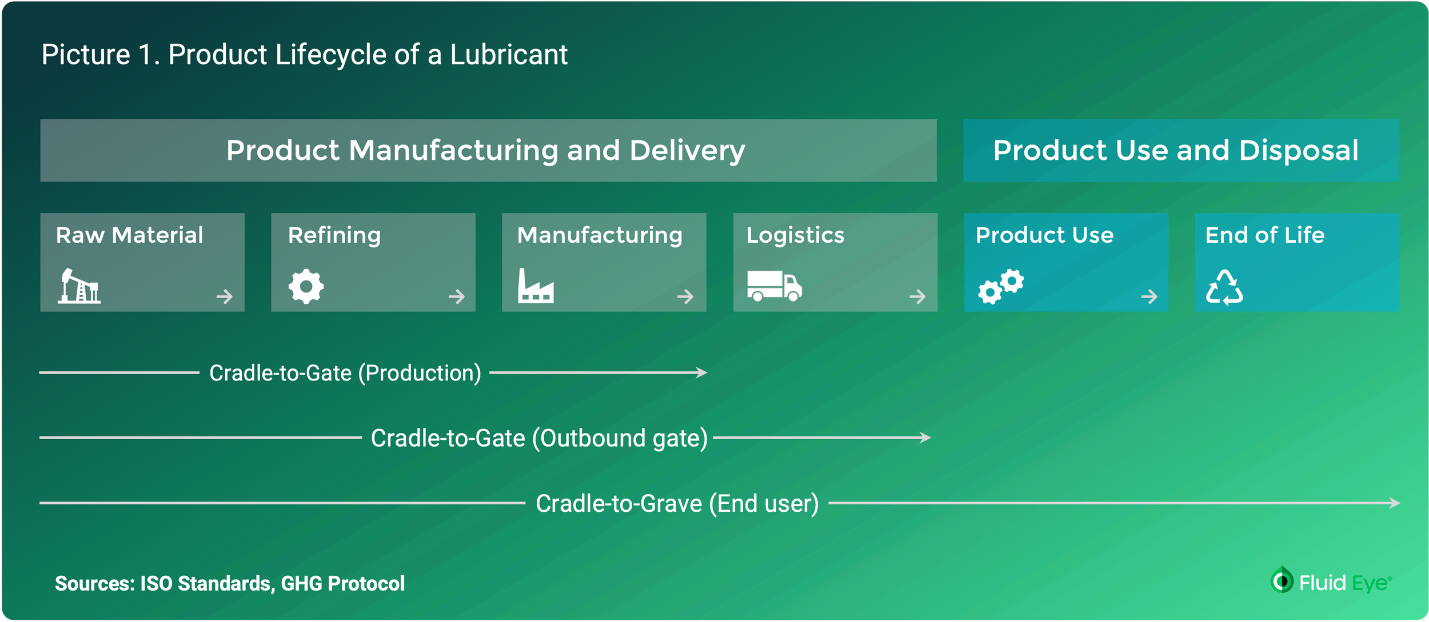
I have spent close to two decades in the lubricants industry, and I am seeing this shift firsthand. One of the biggest changes is how environmental effects are being measured. Life Cycle Assessment, the idea of evaluating impact across a product’s full life cycle, is becoming a more common language across stakeholders. At the same time, Product Carbon Footprint discussions are moving from “nice to have” to “required for doing business,” driven by customers who want credible, comparable numbers.
This is a major operational change. Measuring emissions throughout the life cycle is not a marketing exercise. It forces hard questions: What boundaries are we using? What data is primary versus estimated? What happens when a supplier cannot provide traceable information? How do we maintain consistency from one reporting period to the next?
Once those questions are on the table, the next step is action. Companies are working the levers they can control. Energy efficiency improvements, increased use of renewable power, re-refined base oils from used lubricants, bio-based feedstocks where performance requirements allow, and packaging redesign using recycled plastics are becoming more visible strategies.
What is interesting is how quickly these efforts stop being framed as “green initiatives” and become business fundamentals: cost stability, supply assurance, export readiness, consumer faith, and audit risk.
Regulation is also accelerating the change, particularly where responsibility goes beyond the factory gate. In India, extended producer responsibility policies around used oil and plastic waste are pushing the ecosystem toward circularity and traceability. When responsibility becomes extended, you cannot manage it with periodic emails and spreadsheets. You need systems, controls, and evidence trails.
At the same time, carbon capture, utilization, and storage is gaining momentum in India through collaborations across government bodies, research institutions, and engineering talent. Not all of this will scale quickly, but the wider direction is unmistakable: the decarbonization toolbox is expanding, and expectations will rise with it.
Technology and its impact
Technology will have a major impact on sustainability, yet it is not a magic layer you can add on top of weak data. Where it helps most is in visibility and coordination. Sensors and connected systems can improve measurement at source. Digital workflows can improve supplier participation and data capture. Analytics and AI can recognize outliers, spot gaps, and improve consistency. Scenario tools can help teams model trade-offs before making capital decisions.
But the hardest problems are not purely technical. The toughest part is alignment across standards, regions, and industries. You can capture data, but if different stakeholders define boundaries differently, your numbers become arguments rather than insights. Interoperability is another challenge. Data sits in dozens of systems across suppliers, customers, auditors, and regulators. Stitching it into a reliable picture is difficult, and it is where many sustainability programs slow down.
Then there is the trust layer. Sustainability reporting is easy to display and hard to defend. Many dashboards look impressive until someone asks, “Show me the source, the method, and the controls.” This is why I think the next decade will not be defined via flashy sustainability software. It will be defined by whether companies build an operating model for measurement, reporting, and verification that is as disciplined as finance.
The decade ahead
As sustainability becomes visible in customer experiences, embedded in procurement decisions, and enforced through audit expectations, it moves from “initiative” to “requirement.” And when that happens, the winners are rarely the loudest. They are the most disciplined. They measure consistently, improve transparently, and build systems that survive close inspection.
That taxi receipt in Japan was a small moment for me, but it captured the future on one screen. When carbon becomes a number customers can see, and auditors can verify, the conversation changes. The question is simple: In your business, what is the first sustainability metric your customers will refuse to buy without?