

Judgment is the New Infrastructure
I was going through the articles we have published on Read Intersections and noticed something. Six leaders, from six different corners of the working world, had arrived at the same conclusion.
Lindsay Jessup termed it Chaos Cartographers. Her argument was that technology produces beautiful, confident maps. What it cannot do is tell you which map is worth following. That call is still ours to make. And most organizations have not built the muscle for it.
Sandeep Naug used a different image. Everyone has a paintbrush. Not everyone is Picasso. Access to new tools is no longer what separates people. What separates them now is the craft knowledge they bring to the prompt. Without that, you get more work. You do not get better work.
Ashwini Suman said the same thing from inside an IT services company. His developers have not written a line of code in months. Their role did not shrink, but moved upstream to knowing what to build, which trade-offs are real, and what "done" actually means for the person paying the bill.
This issue wasn’t limited to IT. In manufacturing, Rajendra Abhange saw it on his factory floor. The sensors caught everything. The plant still broke down because there was no standardized human response at 2am when the right engineer was off shift. The gap was judgment applied consistently.
Viiveck Verma watched as a global capability center tried to recreate its success in a new place. The manuals and dashboards arrived easily, but what truly mattered- the trust, the hard-won lessons, the quiet confidence between teammates- couldn’t make the journey on paper. He realized that while processes can be copied, true judgment is built face-to-face, over time, in the daily give-and-take of real relationships.
Joshua Konowe brought insights from the sports arena. He observed that machines can recognize patterns, but humans interpret context. The conversation happening in football, and everywhere else, is not really about the technology. It is about who still gets to call the shot.
Taken together, these accounts show that, beneath industry jargon and metaphors, the underlying challenge is the same. Judgment has become the scarce resource. Everything else is closer to a commodity than it has ever been.
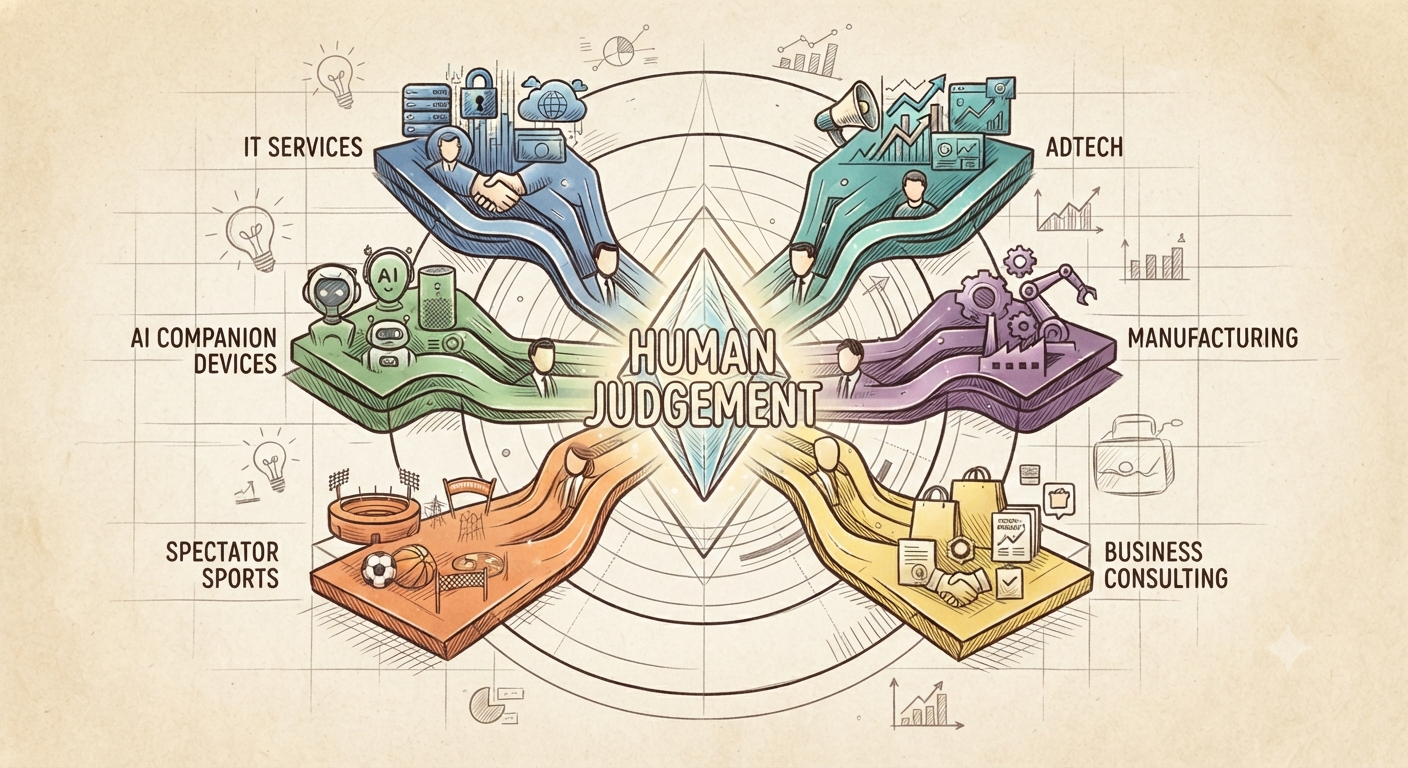
It implies something about how organizations are built. Most were designed to scale processes and repeatable outputs. That worked when execution was the bottleneck, which is not the case now. Judgment cannot be bought, downloaded, or handed over with a playbook. It compounds slowly, through decisions people own and are held accountable for.
The question this leaves for anyone leading through the next three years is not whether to adopt AI. That question is settled. The question is where in your organisation judgment is actually being developed, who is exercising it, and whether you are treating it as the infrastructure it has quietly become.
Most organizations are still measuring the wrong thing.