

The moment that changed the question
I didn’t gradually change my meat-eating habits. I stopped.
Not because of a trend or health goal, but because, in an instant, I realized that all animals, including our pets, are aware and don't want to die. By eating them, I was participating in a system that made someone else do what I could no longer ignore. There wasn’t a transition period. Just a line I couldn’t step back across.
At first, that was personal.
But as my perspective grew, that personal conviction evolved into a larger purpose. Less than a year later, I learned that Texas, where I live, is one of the world's largest beef-producing regions. I remember sitting with that and asking myself a simple question:
Are you going to complain about it, or are you going to do something about it?
That was the moment the problem shifted, from what I consume to what I contribute.
The Gap Between Knowing And Doing
Over the last decade, there has been a clear shift in consumer food-buying behavior, particularly around protein consumption and health.
Globally, more people are questioning accepted assumptions about protein, nutrition, and long-term health outcomes. There is growing awareness that plant protein can meet human needs for amino acids and performance. Medical practitioners are increasingly speaking about the relationship between diet and chronic disease.
There’s also a growing realization that protein alone isn’t the full picture; when it comes from plants, it comes with fiber and phytonutrients, not only isolated protein. And yet, behavior has not fully followed belief.
Most consumers are not actively looking to give something up. They are not searching for restrictions. They are looking for familiarity, satisfaction, and convenience. People are open to change, but only if it doesn’t feel like a loss.
I felt that tension firsthand. Coming from over 45 years on a meat-centric diet, I had real questions, even fear, about whether I would get enough protein, whether I was making a physical mistake. The shift wasn't just external. It was internal. I was asking myself to do something I wasn't sure my body would accept.
For the record: ten years later, without supplementation, my protein levels are perfectly normal. But that fear was real when it mattered. And understanding that fear, from the inside, changed how I reflected on the people I was trying to reach. The question shifted from "How do we educate?" to "How do we design for real-life behavior?"
Where Innovation Still Falls Short
Much of the innovation in alternative protein has missed this. A large portion of the industry assumed that consumers would adopt new products because they are better for them or the planet. In practice, that's not how behavior works.
Taste, texture, familiarity, and identity still drive decisions. Especially in categories deeply embedded in culture, like jerky.
Jerky is not simply a snack. It's tied to routine, memory, and identity. Road trips, time with dad, outdoor culture, and convenience stores carry meaning beyond nutritional value. Most alternatives fail not because they lack nutrition, but because they do not reproduce the experience.
The opportunity isn't just nutritional. It's experiential.
And there's a second gap that shows up at the founder level, one nobody talks about. Conviction can carry you into a problem. It doesn't automatically translate into adoption, and it doesn't protect you from the cost of the years in between.
There were long stretches when I was building, without clear validation. Financial pressure was constant. It created real stress, not just in the business, but at home. There were periods where my focus on building came at the expense of my marriage. I had to learn, the hard way, that conviction doesn't excuse imbalance. That the mission doesn't become an excuse to neglect the person living through it with you. I have since learned how to prioritize my marriage without neglecting my business. That rebalancing was as important as anything I did for the company.
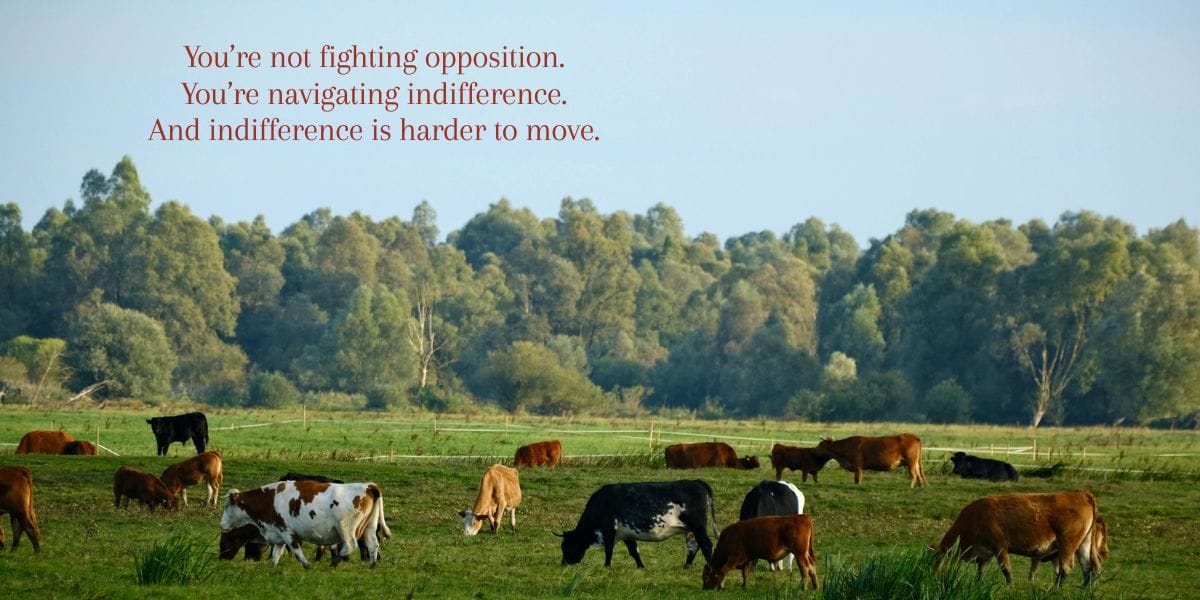
The market wasn't outright rejecting the idea, but it wasn't fully embracing it either. That's a difficult place to operate. Because you're not fighting opposition. You're navigating indifference. And indifference is harder to move.
Designing For Adoption, Not Agreement
What I’ve come to understand is that substantial change in this category won’t come from asking people to change who they are. It will come from giving them a version of what they already want - just better.
Not a different behavior. A smarter one.
Consumers don’t need to stop liking familiar formats like jerky. They need options that deliver the same satisfaction - flavor, texture, and convenience, while improving the nutritional and ingredient profile. That means delivering protein alongside fiber, without cholesterol or saturated animal fat, while still giving people the taste and experience they’re used to.
The future of food industry innovation will depend less on creating new categories and more on improving familiar ones. We’ve already seen this happen with non-dairy milk. People didn’t stop drinking milk; they just found a better version. This is where the opportunity expands.
Because instead of targeting a small, already-converted audience, you’re now speaking to a much larger group: people who are open to improvement but not interested in sacrifice.
I began to see validation in unexpected ways. A vascular surgeon chose to invest in us and became our Medical Director, not because of trends, but because of what he sees every day inside the human body and the long-term impact of diet, especially cholesterol and saturated animal fat.
And in a market where this idea shouldn’t have worked, early signals began to appear, placing in the top ten out of over 800 other brands in a major Texas-based grocery retailer's food competition, eventually earning shelf space in over 100 of their stores. There is no proof that the work is done. But proof that behavior can shift, if you meet people where they are.
What Conviction Is Actually For
The hardest thing about this category is not the opposition. Texas beef country is not subtle about what it thinks of plant protein. But opposition, at least, gives you something to push against. It tells you the idea is alive.
Indifference is different. Indifference means people don't care enough to reject you. They've just moved on to whatever requires less of them. Conviction is what keeps you in the room when that's happening. It doesn't guarantee success. It doesn't remove friction. And it doesn't make the market ready.
What it does is anchor you when none of those things are present. There were moments where improvement was minimal, pressure was high, and outcomes were uncertain. But conviction, when it's grounded in something real, doesn't need external validation to continue. It just needs to be carried out long enough to find agreement with the market.
Conviction doesn't ask for permission. It asks whether you're willing to see it through. Conviction is where this starts, but it’s not where it ends.