

Joy, Laughter, and Love: UX Design for the Next Generation of AI Products
Walk into any children's aisle, and you're looking at the toy industry's version of a cereal box: bright colors, a licensed character on the front, and a promise of fun that rarely survives the car ride home. The industry built itself on the same formula as junk food. It was engineered to be craved in the moment rather than something that nourishes. Parents are worn out from buying overpriced, low-quality, character-branded plastic junk. We have all had enough.
As physical AI moves from apps into talking machines in the home itself, we are about to find out whether we repeat that same recipe at a far more intimate scale.
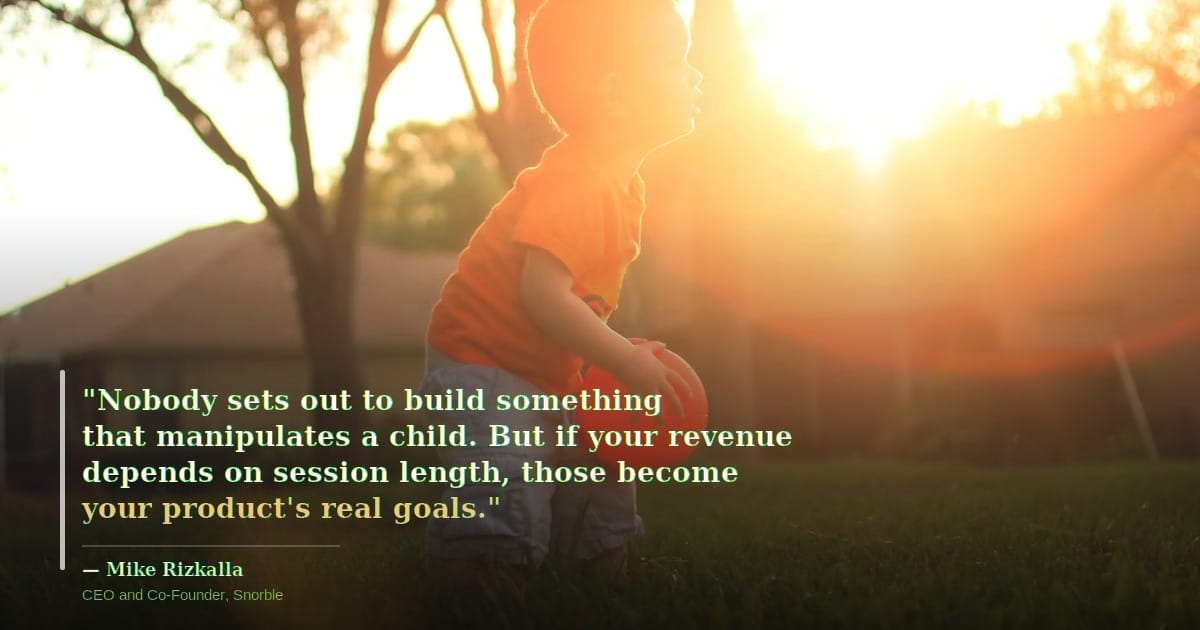
I've spent almost thirty years building products, from broadcast animation to immersive experiences, games, and robotics. The last sixteen of them have been in AI. What I've watched happen, generation after generation, is abstract metrics stripping the soul out of craftsmanship and storytelling. Nobody sets out to build something that manipulates a child, but if your revenue depends on session length, return frequency, and time on device, those become your product's real goals, whether you name them that way or not.
Boardroom Decisions Should Not Solely Drive AI in the Home
The metrics that built broadcast and social media include viewership, watch time, daily active use, and return rate. All of these were designed for one purpose: maximizing attention to sell around it. That playbook migrated cleanly from television to apps to social platforms, because the business model stayed the same throughout. What's shifting now is that this exact scorecard is migrating into AI products that sit inside the home itself: companions, assistants, wearables, and generative tools built for children and families.
What happens when a device already knows how you feel, doesn't wait for a prompt, and can actually do something to help? That's the new interface. A television could be turned off. A phone could be put down. An AI companion is increasingly ambient. It is present in the bedroom, the kitchen, the car, always aware of our surroundings, our moods, our routines, remembering who we are. A genuinely new interface deserves a genuinely new set of KPIs, not the same attention metrics wearing a smarter costume.
In Sweden, advertising directed at children under twelve has been restricted for more than three decades, forcing toy makers there to answer a different question: if you cannot chase a child's attention to sell them something, what do you optimize for instead? New regulations limiting social media and AI access for children are now emerging in multiple countries, including the US. The direction is the same everywhere: less tolerance for products engineered to hold a child's attention, more scrutiny of what that attention is actually being fed.
What If the Device Measured a Life Well Lived?
Almost every metric the industry provides to investors, such as engagement, retention, and session length, is a proxy for how much of a person's time and attention a product can capture. None of it asks whether a child or a family is better off for the time spent. Those are not the same question, and the gap between them is where family tech keeps losing its way.
What would you actually pay for a product that measurably improved your child's life prospects? It's part of why Harvard, MIT, and Princeton are so sought after: attending them lowers the odds a child struggles later in life, and parents already pay enormous sums for that outcome. We should expect the same from the technology sitting in our homes.
Social media is the warning tale. It started from a genuinely good place and can still hit every engagement target on its dashboard while leaving a child lonelier, a parent more distracted, or a family less connected than before. Nobody built that outcome on purpose. It's simply what happens when a scoreboard rewards attention instead of wellbeing.
The playbook for capturing a child's attention is already optimized in retail and digital. What is missing is a playbook for measuring whether the attention was worth capturing.
If you are building a product that lives in someone's home, the question is not whether it holds attention. It is whether the family is better off for having it there.
When the computer walks, talks, has a voice and a face, the opportunity is far greater than what it can do by command. What if kindness along with empathy were core KPIs? Designing for empathy means building machines that focus on the human experience. These should calm a frantic environment, assist communication between parent and child, and foster confidence. The opportunity is moving from being "users" of a device to "partners" in our own home. We want the machine around because it makes our lives better, not because it captures our time.
A New Scoreboard, Built Around Joy, Laughter, and Love
This is where the real opportunity sits, and it's bigger than children's products. As AI becomes an interface genuinely present in our daily lives, we have a rare chance to decide its KPIs before the old ones get copied over by default. Not session length, but joy. Not return frequency, but laughter. Not time on device, but love and connection strengthened rather than attention extracted.
These aren't soft, unmeasurable ideals. They're design principles. Did this family communicate better this week? Did this child grow a skill, a friendship, a piece of confidence? Did this home feel calmer instead of more fragmented? Outcomes such as these can be built for and measured the same way watch time and daily activities are today.
The next five years will decide whether family tech gets a different scoreboard or inherits the one that broke social media. Which one are you building?