One month since launch and 2000 unique visitors from 30 countries, including the US, UK, Netherlands, South Africa, Australia, and India. There are billions of websites, but you chose to visit readintersections.com. Thank you for choosing to include us in your learning path. This encourages us to keep going on our mission:
to capture and curate first-hand operating wisdom from CXOs, Founders, and Senior Leaders, and make it genuinely useful to peers.
Every month, we aim to surface a pattern emerging from the views our authors share. It's not surprising that AI is central to most articles. Across the stories that we recently published, one pattern repeats: AI compresses the learning loop but doesn’t complete the last mile. It speeds up sensing and analysis, but outcomes still depend on judgment, trust, adoption, and follow-through.
A telecom leader described how his teams used to live by “fail fast.” When AI can flag issues in near real time, waiting for failure makes no sense. Engineers now fix problems before anyone logs a ticket. Customer signals that once took months now show up in days. But the limits are clear. AI can predict churn and surface patterns. A leader still has to decide what to do and understand what’s really driving disengagement. This gap also appears in preventive child health. Schools using digital health passports catch anemia and vision problems early, before they affect learning. But the last mile remains human. Technology can recommend interventions, but cannot earn a doubtful parent’s trust or ensure a child wears glasses daily. In education, the point is stark: as one EdTech leader said, the best technology is the one teachers actually use.
Once you observe this “last mile” theme, you start seeing it beyond AI too. Wars in Ukraine and the Middle East have disrupted the supply chains, energy costs, and investment decisions. Aclean energy leaderbuilding EV infrastructure described the current market moving faster than planned, forcing a shift from proving the concept to running it at scale daily.
Net, net, AI speeds up the analysis. But the execution, the judgment call, the work of actually changing how people behave, that still sits with humans. What makes human decision-making harder right now is that it is being exercised in genuinely difficult conditions.
That is exactly why this platform exists. Not to document what worked in stable times. But to capture how leaders think and decide when the ground is moving under them.
To every author who contributed this month, thank you. You didn't just share what went well. You shared where things got hard, where the plan hit a wall, and what it took to make a call anyway. Those are the moments worth writing about.
Read. Reflect. Share. We are just getting started.
Richard Hua | Founder & CEO | EPIQ Leadership Group
Read
The missing ingredient in successful AI transformation isn’t just technology or strategy. It’s how your teams experiment, learn, and manage disagreement, a critical factor in driving innovation and performance with artificial intelligence.
In conversations with leaders across multiple continents, from startup founders in Southeast Asia to enterprise CIOs in Europe, I keep hearing the same frustration: “We have the talent, we have the tools, and we have the strategy. So why aren’t we moving faster on AI?”
The answer is rarely what they expect. It’s not a technology gap, and it’s not a talent gap. It’s a team dynamics gap, and it shows up in how (or whether) people on those teams actually challenge each other’s thinking.
The Shift: AI Demands A Different Kind Of Team Intelligence
The setting of work has fundamentally changed. According to the World Economic Forum, nearly half of workers’ core skills will be disrupted within four years. By 2030, 86% of companies will see jobs, processes, or roles change due to AI. This is not a trend on the horizon; it is happening now.
But here is what most leaders miss: AI adoption does not operate in a domain of clear cause-and-effect. There is no established playbook, and leaders cannot predict the future through analyzing the past, no matter how hard they try. They are navigating what complexity researchers call a “complex domain”, where answers emerge only as you move forward. That demands experimentation, learning, and immediate adaptation from teams.
And that is where things break down. Research from MIT found that the highest-performing teams are not the ones with the highest average IQ or the smartest individual in the room. What actually determines collective intelligence is the average social sensitivity of group members, the extent to which conversations are not dominated by a few voices, and the percentage of women in the group (women tend to have higher social sensitivity). In other words, it is the emotional and interpersonal capabilities - not the cognitive ones - that determine whether a team can innovate well in conditions of uncertainty.
Have you ever seen a group of highly intelligent people get very little done because there was an abundance of knowledge and ego but a shortage of humility and listening skills? You get the idea. Most of the leaders I work with understand this concept, yet their teams continue to underperform. The reason? Those teams don’t know how to disagree well.
The Gap: Most Organizations Are Too Nice To Innovate
Most people think psychological safety means creating an environment where everyone feels comfortable. That is both erroneous and potentially dangerous. Psychological safety, as Harvard professor Amy Edmondson defines it, is a learning culture: a place where people can ask questions, admit mistakes, challenge ideas, and speak up when they disagree, all while maintaining mutual respect.
The goal is not comfort; it is learning and growth. That requires a healthy dose of something I call “generative disagreement.” It’s a type of cognitive friction that produces better ideas and sounder decisions.
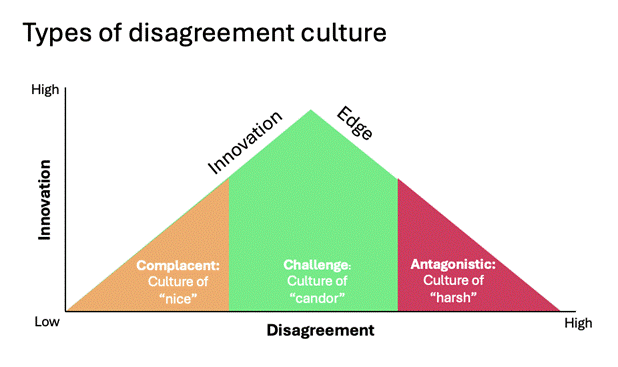
When it comes to disagreement, organizations operate along a spectrum. On the left side, there is too little, which creates complacency (culture of “nice”). On the right side, there is too much, which creates antagonism (a culture of “harsh”). In the middle is an optimal level of disagreement that creates a healthy challenge (a culture of “candor”). That middle zone is where teams maximize innovation and creativity.
In my experience working with thousands of leaders globally, about 70% of organizations land on the left side of this spectrum. They are too nice. They don’t lack opinions; they just don’t want to risk angering or offending their colleagues. So they avoid conflict entirely rather than developing the skills to do it productively. The result is predictable: teams wind up running with suboptimal ideas (usually the leader’s), resorting to passive-aggressive maneuvering, or engaging in wars of attrition where the last person standing wins. These are all poor ways to arrive at a decision, and the cost becomes especially high when the stakes involve how the organization adopts AI.
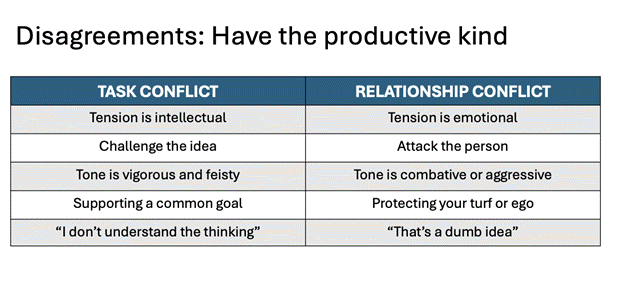
To help leaders promote more generative disagreement, I teach them to distinguish between two types of conflict. The first is task conflict, which involves disagreement about ideas, strategies, and approaches. The second is relationship conflict, where things become personal. Task conflict improves outcomes. Relationship conflict does the opposite. Research has found that the highest-performing teams maximize task conflict while limiting relationship conflict. But most organizations have not invested in these skills. They can’t tell the difference, so they wind up suppressing both.
This is the real gap in AI transformation. Many organizations are pouring resources into technology, strategy, and change management, but few are investing in the team-level emotional and interpersonal skills that determine whether those investments actually drive innovation.
From Theory To Practice: What It Looks Like When Leaders Get This Right
I have worked with C-level executives at multiple companies who were frustrated that their leadership teams would not push back on ideas. These leaders wanted to debate. They wanted their people to challenge ideas and surface risks before decisions were made. But meeting after meeting, they got smiling faces and polite nods.
The problem was never that team members lacked different viewpoints. It was that the environment had not been designed to make disagreement expected, supported, and rewarded.
In each case, we worked together to build certain mechanisms. The leaders began modeling intellectual humility, openly asking their teams to pressure-test their thinking. They would say things like, “What am I missing? I am sure I am not the smartest person in this room,” and, “Poke some holes in my ideas.” When someone spoke up with a dissenting view, the leader would publicly commend it: “That is exactly the kind of pushback we need more of.” The signal was unmistakable: disagreement wasn't only tolerated, it was expected and appreciated.
These shifts did not happen overnight. But over time, consistency increased, and decision quality improved. Teams were identifying risks earlier, surfacing better alternatives, and moving faster on initiatives that previously would have been undermined by silent detractors.
What Comes Next: Building Teams That Can Think Together Under Pressure
The organizations that will lead in AI adoption are not necessarily the ones with the most technical talent or the largest budgets. They will be the ones that figure out how to unlock what Harvard digital innovation expert Linda Hill calls “collective genius”—a team’s ability to think, create, and iterate together in ways that are smarter than any individual.
That requires three things from leaders.
First, build trust through positive relationships. Research consistently shows that the most important facet of trust is not competence or consistency. It is the belief that the other person is genuinely looking out for your interests. When employees trust that their leaders are helping them thrive through AI transformation (not just driving productivity), they engage differently.
Second, create room for intelligent failure. Innovation requires experimentation, and, by definition, it means many things won’t work. Leaders who punish failures of any type shut down the very learning loops that AI adoption demands. The most effective organizations treat early-stage AI initiatives as reversible experiments: try something novel (at the right scale, of course), learn from it, adjust, and iterate.
Third, make disagreement a team norm. This is not about encouraging conflict for its own sake. It is about building the skills and culture where people can respectfully challenge each other’s perspectives, knowing that the goal is a better outcome for everyone.
The leaders I have seen get this right share a common trait: they understand that AI transformation is not simply a cognitive process; it is also a social-emotional one. They expertly integrate their EQ with their IQ and possess what I call the EPIQ skill set. They see the anxiety, uncertainty, and excitement that come with this moment not as emotional factors to ignore or manage around but as the crux of the adaptability challenge. Leaders and teams that learn to channel these emotions into productive energy will be the ones that move fastest and farthest.
The good news is that these are learnable skills. The bad news is that most organizations are not learning them. Expertise in emotional intelligence and interpersonal relations is not a “nice-to-have.” They are mission-critical skills for every organization striving to move deliberately and confidently with AI transformation. And in a world where uncertainty is constant, and the pace of change is only accelerating, the gap between leaders and teams that possess EPIQ skills and those that do not will only grow wider.
Himanshu Jain | Founder & CEO - Promenable | Ex President - Diversey Inc
Read
Small changes can deliver outsized impact.
What distinguishes human beings from the rest of the species? Apart from the ability to make stories as beautifully explained by the leading Thinker Yuval Noah Harari, it is the desire for progress. Progress means making things better, step by step. Each improvement, no matter how small, contributes to higher productivity, reduced effort, and greater satisfaction - key drivers of sustainable business growth.
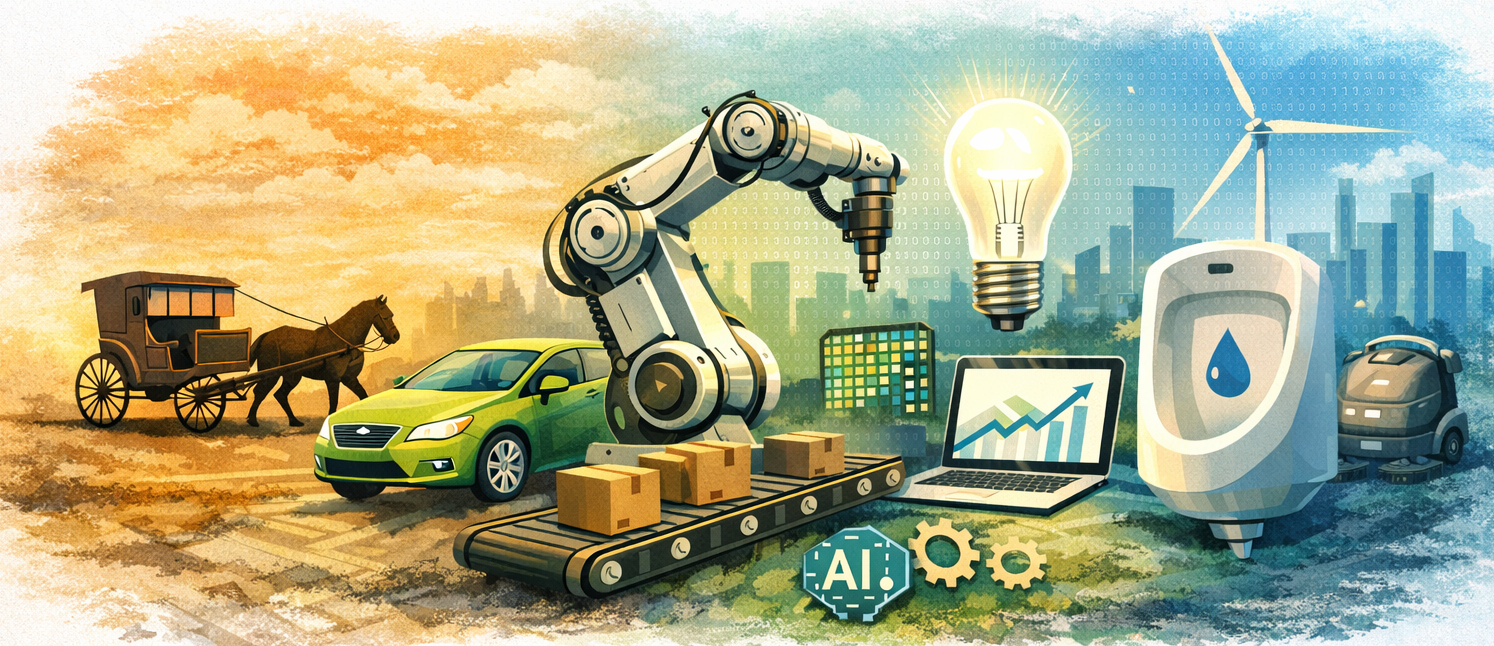
This is what the Industrial Revolution brought us: no more horse-drawn carriages with low speed and limited comfort, but cars that offered greater comfort, faster speeds, longer distances, meeting all the conditions of progress. The ongoing digital does the same but at a different level – no more snail mail, visiting banks or post offices, fewer errors, and much higher speeds. While revolutions are about mega changes over a short period of time, human beings have always been driven to make things better on a daily basis. These incremental changes are no less important than they lead to revolutions that transform human life.
For any change to work, it is vital that it offers a clear economic benefit, as the input should have a lower value than the output for it to be adopted and sustained. It needs to be embraced by the business world to either create better value for its customers, reduce effort/costs, improve speed and productivity, or all of the above.
When we talk about technology, we often refer to the digital space, e-solutions, CRM systems, and AI. What we often overlook are the basic tech changes that make our world better, as much or more – for example, shifting to LED lighting that saves 90% energy, BLDC fans vs conventional AC fans that save 65% energy, or a mundane cleaning process that needs less water by design.
I experienced both kinds of tech making huge changes up close and personal during my stint with Diversey, a company that uses technology to make hygiene and cleaning simpler, more productive, and sustainable, with greater dignity for the user.
Diversey is in the business of professional hygiene delivery (chemicals, dosing systems, machines, robots, training, certification – the entire gamut), prima facie a boring business. How do you find value in something as mundane as cleaning? How do you get the attention of the CEOs in your customer settings? By creating an impact that matters to him. Which process is used for cleaning a urinal has no interest for the CEO, but the environmental impact of water reduction and the help in achieving sustainable targets will.
Sustainability has been at the core and key driver for the business at Diversey. The idea has been to eliminate/reduce the need for water or energy at the source itself, rather than play with tools like water recharging to claim water neutrality, or shift to so-called green energy or electric cars, which just shift the footprint to another point.
I can share many examples of how technology came to the fore to improve things. The first one that comes to my mind is adaptation to waterless urinals. Although the concept is not new, what was new in this case was the ability to convert any men’s urinal into a waterless one. The problem with conventional waterless urinals has been the abuse of enzyme tablets, and to overcome this, we converted the tablets into a liquid spray that is applied periodically, along with non-pathogenic live bacteria that can grow in the drains to become self-sustaining. Nothing great, but the outcome was phenomenal. This is just 1% of the Indian urinals’ population, which saved 2 billion litres of water in a year. For a country with just 3% of freshwater and 15% of the population, this is a real impact. Many such examples exist, including converting a high-temperature laundry system to room temperature, converting wet lubrication systems in beverage bottling plants to dry lubrication, consolidating complex CIP systems into a single protocol, and reducing time, energy, water, and so on.
In the conventional digital technology space, Diversey deployed AI to track employee engagement in 2015, when AI was not yet a buzzword. It would track the employee onboarding and the employee's life at the company by chatting as a chatbot (which was so good it was almost like a real person) and using their responses to probe further until it reached the pain point. The pain point was then shared with HR and the CEO to have a suitable intervention. The process was kept confidential to avoid compromising the employee with his direct manager, which might otherwise happen. The impact was huge, with engagement scores consistently exceeding 80% and ranking among the highest in the cohort. Another example was using software to read email communications and convert them into sales orders rather than punching them in manually, lowering errors, improving productivity, and strengthening customer cell action. Progress in efficiency of >30% and reductions in outcome errors of >20% led to lower operating costs and happier customers. What we just discussed are different types of innovation - product/ process using technology from basic chemistry to application engineering and IT tools. The business's use of technology is critical to its vitality. Business performed in the top trajectory, creating value for the investor-parent, employees, and, most importantly, customers. Leaders should not judge the idea in itself, but rather its potential impact on the business and society. Small ideas cost less, are easier to implement, and thus pose even less risk. The best way to adopt innovation is to create a culture of ‘no judgment’ and encourage ‘out of the box’ thinking. Not all your team can be Elon Musk, but if encouraged, they can create a similar impact in their space.
The above shows the need for the business to constantly renew itself to stay relevant in this fast-changing world. As they say, innovation is the lifeblood of the business, and technology feeds innovation.
Lovee Ramachandran | Founder and editor | Read Intersections
Read
Why We Built Read Intersections
In 2006, I was in a boardroom full of banking executives, remote in hand, walking them through a new solution and its business case. Over the next 15 years, the industry changed, and my work shifted from enterprise banking to financial inclusion. Still, my focus stayed the same: finding solutions.
I learned that the solution on paper often doesn’t work in practice. What really makes a difference is often simple: timing, trust, clear language, and people adopting them.
Over time, I stopped seeing solutions as straightforward. They appear where technology meets strategy, where industry changes overlap with global events, and where rules, culture, and real-world execution come together.
During this journey, I relied on leaders and field teams who had faced challenges and still moved forward. It was then that I wondered: why do so many valuable lessons stay hidden inside people and companies?
My partner shared a similar experience with a different lens. He had seen C-suite leaders and founders make tough decisions with little information and real consequences. But once the moment passes, the lessons often stay behind, unshared.
Hence was born the idea of Read Intersections.
Read Intersections is an independent publication sharing first-person stories from C-suite leaders and founders. It’s for peers who want to learn from real experiences, not just what was supposed to happen.
We focus on decisions made where markets, customers, technology, people, rules, and risks all come together. Most big decisions don’t happen in isolation. They happen when many factors overlap, with limited time and incomplete information. That’s where the most important lessons are, if we’re honest about them.
Bringing this first edition to life wasn’t easy. Leaders took a chance on us and shared honest stories, not just successes. I’m thankful to our founding authors from across industries. Despite different fields, they faced the same realities: uncertainty, hard choices, and balancing immediate pressures with long-term goals.
I invite you to read, reflect, and join the conversation. Share your thoughts and stories, and help us build a community where real lessons are brought to light.
Cough is one of the most common symptoms of respiratory diseases, and the number one reason why people seek medical help worldwide. Whether it's due to chronic cough, acute infections, or pre-existing conditions such as asthma and COPD, accurately understanding and measuring cough is important for exact diagnosis and treatment.
However, cough remains one of the least understood symptoms in respiratory medicine. Until recently, clinicians relied on subjective patient reports to assess cough frequency and severity, lacking objective tools for cough monitoring. This subjective aspect affects the management of diseases such as chronic cough, asthma, bronchitis, and other respiratory conditions, where a definite cough measurement is important for successful treatment.
In other words, we’ve been trying to manage coughs without a reliable measuring tool. Imagine managing a fever without a thermometer, or blood pressure without a BP monitor. Until very recently, no instrument or tool existed that could support clinical decisions with quantitative evidence. As a result, cough assessment is still stuck while almost every other domain of medicine has modernized. Innovation in cough therapeutics has basically been nonexistent.
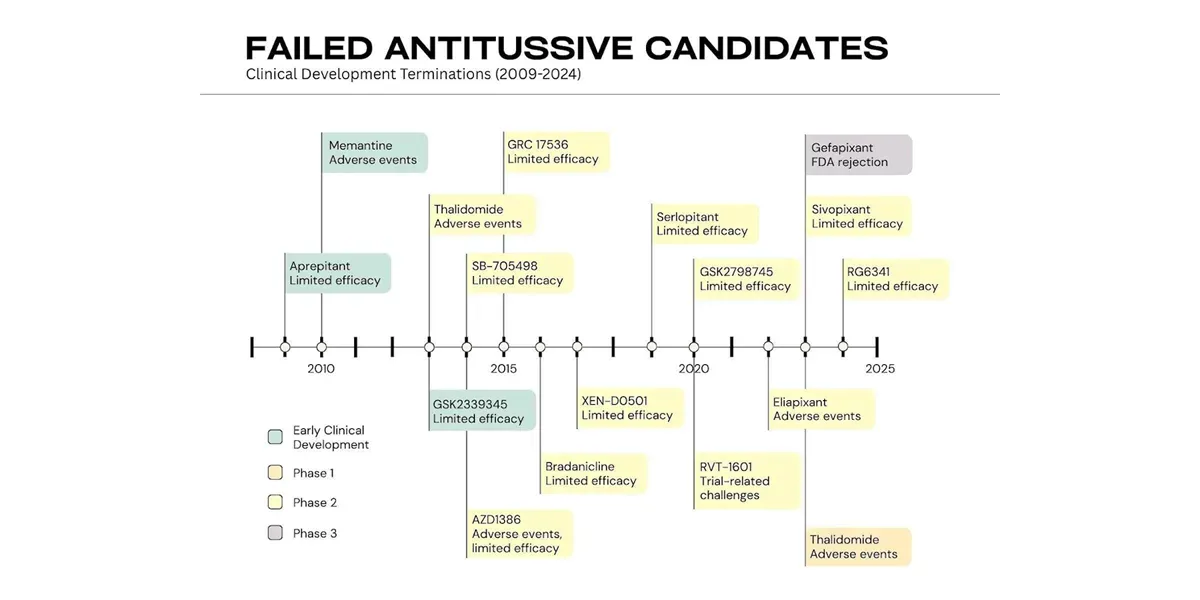
The last time a modern regulator approved a cough drug was way back in 1958, when the FDA approved Dextromethorphan. To this day, this is the most commonly prescribed antitussive. In the last 13 years alone, more than 15 modern molecules have been abandoned or rejected by regulators because the available data failed to show a definite, objective impact and developers had no trustworthy way to prove it. The medical device sector understands this intuitively. Continuous cough monitoring, enabled by AI and digital biomarkers, is now solving this challenge and changing how clinicians approach cough assessment.
A Technological Shift
The last decade has brought two technological shifts that have changed the trajectory of cough science, digital health, and respiratory disease management. First, AI matured. Specifically, machine learning models became capable of distinguishing nuanced acoustic patterns with high precision. Sounds could now be parsed, classified, and analyzed at scale by machines capable of “learning”. Second, billions of people began carrying powerful sensors and processors in their pockets. Smartphones and wearables turned into ubiquitous health data collectors. Always on, always near the body.
This convergence created the missing pathway to measure cough continuously in the real world. It enabled us to develop tools that detect cough events with high accuracy, without involving specialized hardware or much infrastructure.
Using on-device acoustic AI, the models we built identify coughs securely and unobtrusively, in any environment, with minimal user effort. More importantly, they do so over long periods, producing the kind of longitudinal data that clinical science has been missing. This is critical for coughs, which happen over time and therefore cannot be “measured” in a laboratory.
This capability is now becoming standard in respiratory research and clinical trials. Continuous cough monitoring and digital biomarkers are changing study design, endpoint definition, and the quantification of treatment impact. This innovation enables pharmaceutical companies and health service providers to access precise, reliable endpoints for respiratory disease research. In less than 5 years, Hyfe’s technology has been used in over 50 clinical studies, resulting in more than 20 peer-reviewed publications and progressing the discipline of objective cough measurement.
For startups, this illustrates a wider trend: once measurement enters a previously unmeasurable domain, the entire innovation ecosystem shifts. These dynamics mirror what has been observed in other bio signal measurements, such as glucose monitoring, cardiac rhythm analysis, and sleep science. Once accurate, passive, and scalable measurement becomes possible, an entire wave in healthcare transformation follows. The adoption of AI-powered digital biomarkers in these domains has revolutionized disease management and patient care.
The Real Challenges Are Not Technical
While the technology is advancing quickly, the barriers to adoption are rarely algorithmic. They come from institutions, incentives, and habits.
In the case of cough monitoring: Clinicians must shift from qualitative impressions to measurable indicators.This requires new workflows, new training, and new comfort with digital biomarkers. It also adds friction (and time spent/ patient), which they can perceive as ineffective. Additionally, clinicians have a healthy distrust of “technology gimmicks, which raises the bar in proving evidence and impact. Payers must recognize the value of measurement-rich care. Reimbursement models lag behind the clinical realities of modern respiratory disease. They also require new systems that make sense of continuous data and predictive analytics. Regulators must treat digital tools as precision instruments.This means validating them with the same rigor as other medical devices and integrating them into guidelines and frameworks.
These impediments are significant and can be expensive, but they follow a familiar pattern seen with digital health tools such as ECGs, continuous glucose monitors, and wearable-based arrhythmia detection. Once clinical evidence accumulates and early adopters demonstrate utility, healthcare systems adjust rapidly. The digital transformation in respiratory health is following this same trajectory.
What Comes Next
Symptomomics and multi-modal respiratory monitoring: Cough frequency is one data point. Measuring it uncovers things like bursts, nocturnal/temporary patterns, etc., all of which carry a previously unknown medical signal. Modern models are amalgamating these signals into unified respiratory phenotypes, enabling the profiling of disease dynamics that were previously impossible.
Predictive models for exacerbations and disease progression: Longitudinal cough data already show patterns that precede clinical deterioration in COPD, asthma, infections, and chronic cough disorders. Expect predictive analytics to become central to case management and remote monitoring programs. It is realistic to foresee early detection of things like lung cancer based on subtle changes to cough patterns, years before symptoms are present.
Consumer wellness and therapeutics: As regulators formalize pathways for digital biomarkers, consumer-facing cough monitoring apps and wearables will expand. These tools will support behavioral therapies, early detection of respiratory diseases, environmental exposure assessment, and personalized health guidance, emulating the evolution of digital sleep and fitness technologies.
Personalized digital therapeutics: Continuous symptom surveillance enables continuous feedback loops for specific interventions. This allows for very easy personalization of factors such as dosage, timing of intervention, and environmental conditions (humidity, temperature, allergens, etc.) during therapy. This means higher impact at lower costs.
Drug development is being redesigned around continuous digital endpoints: Instead of relying on short, clinic-based assessments, clinical trials are shifting toward real-world, time-resolved metrics enabled by digital biomarkers and AI-powered cough measurement. This unlocks smaller, faster studies with more precise signals. Precision cough data is becoming a default requirement in respiratory drug evaluation and regulatory submissions.
Public Health: Aggregate, privacy-preserving cough data at the population level can support early detection of infectious disease outbreaks, track seasonal trends, and monitor environmental health impacts. This represents a new category of acoustic epidemiology with significant public health, research, and commercial applications in respiratory health analytics.
Opportunities For Builders And Innovators
The lesson from other domains is consistent: precision measurement converts stagnant fields into fertile ones. It brings structure to previously ambiguous problems. It reduces R&D failure rates. It reshapes reimbursement. It reveals entirely new categories of unmet need. Cough monitoring is at this inflection point now. The next generation of medical device companies in respiratory care will be built on continuous, objective data. They will create tools, therapies, and models of care that were impossible when cough was just a story patients told. Innovators who understand the historical barrier will see the scale of the opportunity once it is removed.
Making India the nerve center of global transformation
Over the past decade, India has swiftly become a leading international leader in Global Capability Centers (GCCs), transforming from an operational extension of multinational companies into a nexus of innovation, digital transformation, and enterprise strategy. Today, India’s GCC ecosystem is advancing in artificial intelligence (AI), machine learning (ML), cloud computing, cybersecurity, and predictive analytics, making it a key hub for Fortune 500 companies and global enterprises seeking digital excellence and competitive advantage.
What’s exciting is that India is not just catching up; it is now leading. And enterprises that adopt this new GCC paradigm will unlock advantages in speed, intelligence, and innovation that simply didn’t exist a decade ago.
What Changed While The Industry Wasn’t Paying Attention
GCCs are now growing much faster than the rest of the tech industry. In FY24, India’s GCC sector grew by about 40%, while major IT service providers grew by only 0-5%. This goes beyond a temporary trend; it signals a real shift towards owning more capabilities rather than outsourcing. India now hosts over 1800 GCCs with 1.9 million skilled digital professionals, making it the world’s top destination for capability centers. The Indian GCC market is valued at $64 billion and is projected to reach $110 billion by 2030, solidifying India's leadership in global digital transformation and innovation.
The nature of work has undergone a complete reset. Today’s GCCs lead: end-to-end product mandates, AI/ML modelling and deployment, zero-trust cybersecurity frameworks, digital product studios, enterprise architecture & platform engineering, predictive analytics and automation roadmaps, and ER&D and experience engineering. This is not “delivery support.” This is enterprise critical capability building.
India’s combination of talent and AI is now a major global advantage. India has the largest young digital workforce, and its enterprises are among the fastest adopters of AI. A 300-member AI-augmented GCC now achieves what 700 to 800 people did a decade ago. This is not just cost efficiency; it is capability compression, allowing increased output, faster, through smarter systems.
The Mid-market GCC is the most powerful, under-discussed trend. Small and mid-sized GCCs, with teams of 25 to 250 people, are growing faster than traditional large enterprise centers. Why?. Their set up cycles are 2 - 3× faster with lean operating rhythms. Their structural overheads are low with opportunity to expand through talent available in Tier-2/Tier-3 cities. This helps them with higher retention and deeper specialization, while having a direct ownership of their key processes with no vendor middle layer.
Where technology powers the new GCC reality. Technology has become the accelerator of India’s GCC momentum.
AI-enabled hiring collapses build times. AI-powered hiring, automated skill matching, and better onboarding help GCCs build teams in half the time it used to take.
Distributed talent models are the new normal. GCCs are expanding into Tier ⅔ Indian cities such as Indore, Coimbatore, Kochi, Jaipur, and Chandigarh, tapping into premium digital talent with greater stability and cost efficiency.
Automation enables outcome-based operating models. Intelligent workflows move teams from effort to outcomes: faster release cycles, automated QA, predictive workload balancing, and minimized operational friction.
Innovation capability has shifted to India. Innovation labs, cyber-defense pods, product design studios, and analytics engines now operate from India as primary innovation hubs, rather than as extensions.
Where Technology Alone Isn’t Enough
Many GCCs experience obstacles not in capability, but in organizational design. 1)Leadership and deep specialization still remain uneven. Scale exists, but globally seasoned architects, AI scientists, and transformation leaders are still in short supply. 2)Infrastructure maturity varies across emerging cities. The talent is available; the readiness of real estate, power, and data infrastructure is not always consistent. 3)Compliance and governance require expertise, not automation. Multi country regulations, tax frameworks, and HR compliance require expert judgment, making a specialized GCC enabler in India essential. 4)Culture is the hardest leap. Ownership cannot be mandated. Integration cannot be automated. Culture must be intentionally built.
The GCC Playbook Modern Leaders Must Embrace
The next era of GCC evolution will be defined by leaders who can orchestrate talent, AI, and operating model innovation into an integrated strategic engine.
GCCs will serve as strategic levers rather than merely execution units. Expect India-based centers to lead: AI governance & risk, customer experience transformation, cloud & platform modernization, cybersecurity architecture, product velocity, and Digital operating model redesign. India becomes the nerve center of global transformation.
Mid-market GCCs will define the next 1,000 centers. These centers deliver versatility, speed, great skills, and the cost benefits that modern businesses need, especially mid-sized global companies looking for strong teams.
AI will enhance talent, but leadership will distinguish successful organizations. AI speeds things up, but leadership multiplies the results. The defining capabilities will be: governance clarity, cross-border collaboration, domain maturity, and culture of ownership.
Talent strategy becomes the competitive moat. Winning GCCs will shape talent through: Applied AI academies, rotational leadership tracks, domain specialist career paths, and global mobility opportunities. Talent turns into capability, and capability leads to advantage.
Making India the world’s innovation headquarters. By 2030, India is expected to anchor: 2.5M + GCC professionals, 20,000+ global enterprise leadership roles, global CoEs in AI, cloud, cyber, product, and data, and the world’s most distributed innovation network. This is not outsourcing. This is a reinvention of the operating model, developed in India.
A Final Perspective
The story of India’s GCCs is not about cost. It’s about building capability, aiming higher, and reinventing how things are done. Leaders who view India as a transformational partner, rather than just a support location, will unleash considerable momentum in a world that appreciates speed, intelligence, and agility. Because the truth is: India is powering the growth of Global Enterprises.
Dr. Ramya Chatterjee | CEO & Director | Prointek Global
Read
Why the next decade belongs to intelligent classroom ecosystems
Over the last two decades in the AV & EdTech industry, I’ve seen hardware cycles rise and fall, panels get thinner, pixels get sharper, and OPS specs become a competitive battleground. But nothing- not 4K/8K, not IR bonding, not Android upgrades - has changed our industry the way AI has in the past 24 months. The shift is quiet. It’s not a flashy “robots replacing teachers” storyline. It’s a deeper transformation of daily workflow, classroom expectations, school procurement behavior, and the value chain that sits behind educational technology.
What Has Changed Recently And Never Existed Before
AI is now the default expectation. A few years ago, AI was positioned as a premium add-on. Today, teachers start with a simpler question: How much does your AI reduce my effort in the classroom? It is no longer a checkbox; it’s a primary differentiator.
Teachers want automation, not more features. “200 apps” is not a selling point. What matters is less work: fewer clicks, faster explanations, instant content, and smoother classroom flow. Utility beats variety.
Security has moved into the boardroom. As blended learning expanded, so did exposure. Institutions are now asking for encryption, access controls, auditability, and admin dashboards, not as nice-to-haves, but as table stakes.
Buying decisions have shifted from specs to ecosystem readiness. The winning panel is rarely the brightest or the largest. It’s the one that fits naturally into the institution’s teaching workflow, integrates cleanly with current systems, and can be supported reliably over time.
Students have changed, too. Gen Alpha expects technology to work effortlessly. Slow, complex, or unintuitive interfaces are abandoned immediately. Experience is no longer a layer on top; it is the product.
How Technology Assists Teachers Today
AI reduces classroom friction. Summaries, assessments, auto-layouts, and transcription quietly save minutes in every class, freeing teachers to focus on explanation and interaction rather than setup.
Remote device management has matured. Administrators can now lock, update, and monitor devices across buildings with far less manual effort, making extensive rollouts more predictable.
Content ecosystems are cleaner and more usable. Educational bodies increasingly expect mapped curricula, ready-to-use templates, and structured lesson flows rather than raw content repositories.
Service readiness has become a differentiator. Schools and institutes look for on-site response, predictable turnaround times, as well as proactive maintenance, not just warranties on paper.
Core reliability has improved across leading brands. Bonding quality, touch precision, and thermal stability are significantly better, reducing classroom interruptions and improving day-to-day trust in the technology.
Where Technology Still Falls Short
Despite rapid adoption, today’s classroom technology still breaks in predictable places. The gaps are less about features and more about context, constraints, and field execution.
AI still struggles with local context. India’s multilingual spectrum and code switching patterns challenge global models. Accuracy drops when language, accent, and classroom slang mix in real time.
Offline intelligence remains limited. Many schools operate with inconsistent connectivity. When systems degrade without the internet, day-to-day usefulness drops, and trust erodes quickly.
Teacher adoption is still the main bottleneck. Most teachers use only a fraction of what panels can do, often 15–20%. Training, time pressure, and habit loops matter more than new capabilities.
Digital systems don’t talk to each other. Schools running mixed-brand infrastructure face fragmentation across content, devices, and analytics. The result is duplicated effort and uneven experiences across classrooms.
Security and compliance are uneven. Practices vary widely across vendors and institutions. Consistent safeguards, audits, and enforceable standards are improving, but uniform compliance is still years away.
What AI-First IFPD Solutions Are Getting Right
The panels gaining traction in Indian classrooms share a pattern. They offer instant lesson summaries that save teachers 10-15 minutes per class. They auto generate quizzes from handwritten notes and diagrams. They respond to voice commands - "summarize this," "explain that" - so teachers stay in flow instead of navigating menus. The best ones run AI locally on the device, solving the connectivity problem that plagues rural and semi-urban schools. They're built for India's multilingual reality, not retrofitted from global platforms. And critically, they keep classroom data on-premise unless explicitly exported. The adoption numbers tell the story: minimal, easy-to-use interfaces get teachers to 70-80% feature usage within weeks. Complex ones gather dust. The technology that wins isn't the most powerful - it's the one teachers actually use.
What’s Coming Next
Based on current adoption patterns, several shifts now feel less like predictions and more like inevitabilities. They are already visible at the edges of the market and will move to the center faster than many expect.
Edge AI becomes the default, not the exception. Constraints on speed, privacy, and reliability will push intelligence closer to the classroom. Cloud-only AI will increasingly feel slow and exposed, while edge-based models become the standard for instantaneous engagement.
Interfaces move from touch-first to voice-first. Touch will not disappear, but voice will handle most day-to-day workflows. In instructional environments, voice is faster, more natural, and better aligned with how teachers already operate.
Lesson creation becomes automated and mainstream. Uploading a chapter will be enough. Slides, diagrams, questions, and summaries will be generated in minutes. The bottleneck will no longer be content creation, but judgment and curation.
Institution-wide analytics begin to shape decisions. Participation, engagement, and learning outcomes will increasingly be reflected in dashboards. Over time, these signals will influence curriculum design, asset allocation, and performance measurement.
Ecosystem lock-in matters more than hardware. The panel itself will matter less than the ecosystem around it. Winning platforms will behave like hubs, integrating content, analytics, and services rather than competing solely on device specifications.
Service culture becomes a differentiator. Adoption at scale will favor brands with strong on-ground support. Training, reliability, and responsiveness will matter more than feature lists.
AI shifts from assistant to co-creator. Teachers will depend more on AI not just to assist, but to design, refine, and personalize their teaching flow. The relationship will feel collaborative rather than transactional.
What We’ve Learned After Thousands Of Classrooms
Teachers forgive missing features, but not complexity. If something takes more than a few seconds to understand or execute, it simply won’t be used, no matter how powerful it is.
Institutions value reliability instead of new developments. Steady functionality and dependable support matter more than frequent or flashy upgrades.
Students pull the adoption curve upward. They acclimate to new technology faster than teachers and often set expectations that institutions are forced to meet.
Hardware differentiation is narrowing. As physical capabilities converge, software, integration, and service will increasingly determine which platforms win.
Trust matters most. Schools are looking for long-term partners who understand their context and stand by their deployments, not vendors chasing the next sale.
The Bottom Line
We're standing at a quiet but profound turning point. The shift from hardware centric classrooms to intelligence-driven ecosystems has already begun. AI isn't replacing teachers. AI is removing the friction that keeps them from teaching at their best. The brands getting this right aren't just adding features - they're reimagining the teaching workflow. And for those of us building the future of Indian EdTech, the opportunity is clear: create technology that saves time, reduces mental workload, and respects the realities of Indian classrooms. If we keep doing that, we won't just respond to the shift; we'll be part of it. We'll lead it.
AI In Telecom: Why “Learn Fast” Is Transforming Network Automation
Harish Laddha | Chief Business Officer | Reliance Jio
Read
A Perspective from the Digital and Telecom Industry
Over the last five years in the telecom industry, I’ve leaned on a “fail fast” mindset to drive innovation. But with the rapid rise of artificial intelligence (AI) in telecom, the landscape is changing. Today, AI-driven network automation, predictive maintenance, and progress in customer experience are evolving how telecom operators achieve operational efficiency and growth. This mindset encouraged my teams and me to take calculated risks, experiment, and view failure as part of progress. As a result, we developed a culture characterized by speed and curiosity.
But as we enter 2026, I believe the context has shifted. The world around us, especially in the digital and telecom sectors, now rewards not those who fail fast, but those who learn fast.
The Shift: From Connectivity To Intelligent Ecosystems
The Telecom sector over the last decade has focused on building the pipes that connect billions of people and devices. The next decade is about analyzing and acting on what flows through those pipes i.e. intelligence.
AI has become deeply infused within every layer of our operations, from network optimization and predictive maintenance to customer engagement and product innovation. Data flows are fast becoming learning flows. Five years ago, decisions on pricing, network rollout, or customer segmentation required weeks of analysis and discussion. Today, AI simulates scenarios in minutes, projects outcomes, underscores trade-offs, and suggests optimal decisions using real-time information.
This has fundamentally changed the tempo of leadership. Speed is still important, but direction is now decisive. “Fail fast” made sense when insights lagged behind action. But when AI can provide near-instant insight, failure doesn’t have to be our teacher anymore.
Where AI Performs Well And Where It Still Falls Short
AI is not a magic solution. It becomes a force multiplier when combined with sound judgment. In my experience in telecom, AI has transformed efficiency. Networks now self heal. Predictive models forecast demand surges before they happen. Chatbots handle millions of queries daily, improving response time and consistency. According to the Ericsson Mobility Report (January 2025), nearly 85% of global telecom operators have integrated AI-based automation into at least one network domain, with most mentioning increased fault detection and energy efficiency as principal benefits.
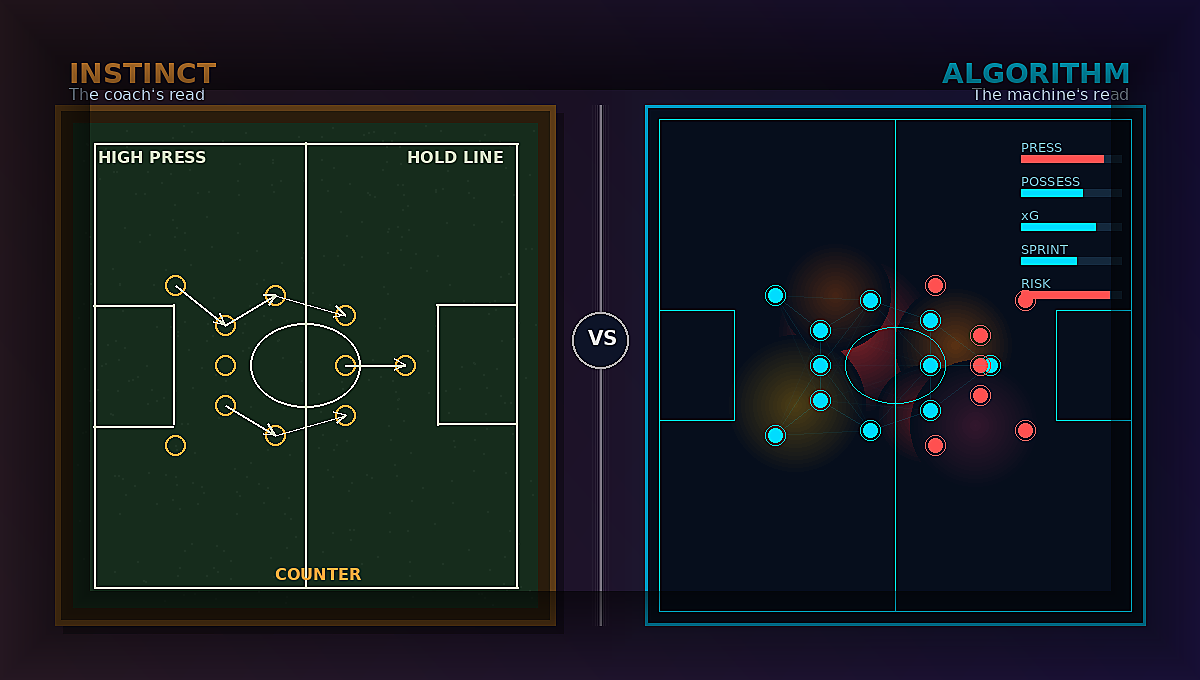
But I see that AI struggles when context, as well as empathy, matter most. It can process signals, but not always intent. It can predict churn, but it can’t understand why a customer disengaged in the first place. It can surface insights, but deciding which trade-offs are consistent with the long-term purpose is still my decision as a leader. That’s where human leadership still defines the edge. The leader’s job is no longer to spot every pattern, but to ask better questions. To know when the model’s confidence is misplaced, and when human instinct must override algorithmic certainty.
In this new landscape, learning fast means merging the advantages of both worlds, human reasoning and machine intelligence, to create organizations that respond continuously.
Learning Fast: The New Mindset For Telecom Leaders
In the telecom and digital ecosystem, “learning” used to be linear: project post mortems, market studies, quarterly reviews. Now, it’s continuous and real-time. Our data infrastructure captures every engagement, transaction, and behavior. The challenge is data conversion: turning information into insight, and insight into action. AI helps by compressing the learning loop. It tells us what’s working (or not) much earlier in the cycle. It gives teams permission to pivot without waiting for failure to make the case for it.
For example, a new product feature once took months of trial before customer response was clear. Today, behavioral analytics powered by AI can signal within days whether adoption is on track. The lesson arrives faster and at a fraction of the cost. That’s what “learning fast” looks like for me in practice: moving from intuition-led iteration to intelligence-driven improvement.
Leadership In The AI Era: Curiosity Over Certainty
For CXOs and founders, this shift requires a change in mindset. Our value no longer comes from having the answers; it comes from asking the right questions. AI can offer options, but leadership decides the direction. Curiosity is now my most strategic skill. It drives experimentation, receptiveness to feedback, and the skill to analyze AI insights via the lens of purpose, experience, and people.
When I consider agility, I think beyond speed. True agility is about learning velocity, how quickly my organization and I can sense, interpret, and respond. The companies I believe will thrive in the next decade are those where inquisitiveness is institutionalized and where teams are rewarded for learning loops, not just launch speed.
What’s Next: Experiment Smarter, Build Smarter
In 2026 and beyond, telecom and digital enterprises will operate as learning ecosystems, combining human insight, customer feedback, and AI intelligence in near real time. Competitive advantage will come from learning effectively from each experiment, not simply conducting more experiments.
Imagine product testing that doesn’t just capture results, but constantly improves the hypothesis. Imagine network planning that adapts alongside customer behavior, not just traffic patterns. Imagine AI copilots that accelerate decision making, not by replacing judgment, but by enhancing it.
That’s the future we’re hurtling toward, where invention is driven by faster learning cycles, not faster failure cycles. So, as a leader, I’ve stopped chasing “failures” as signs of courage. I use technology to close the gap between a mistake and a breakthrough.
If “fail fast” was the motto of the startup era, “learn fast” is the mantra for the intelligent era. AI enables us to anticipate, test, learn, and adapt before obstacles emerge. However, it remains our responsibility to determine how to use that foresight. As someone in the industry, I find that my biggest challenge isn’t technology, but mindset. I believe those who succeed in the next decade will balance the speed of AI with the value of experience.
Why Are Small Enterprises Hesitant To Invest In Sustainability?
Sudhir Jain | SVP, Supply Chain & People | Bira91
Read
A practitioner’s view from four decades in beverage manufacturing on why sustainability is hardest and most necessary for SMEs.
In my 40+ years of career, I have worked in beverage companies for 30 years. And when you are in this field, you develop a strong admiration for your main, and largest by quantity, ingredient: water.
When I joined United Breweries in 2004 as the Plant Head for one of their recently acquired breweries near Delhi, we were struggling with high water consumption and, as a result, high wastewater discharge. The groundwater was depleting; whatever drops remained had excessive levels of dissolved minerals and were thus unsuitable for brewing beer. The situation was so grim that we risked abandoning the site and relocating to a new one if it wasn't rectified. And trust me establishing a new brewery is not easy! The capital expenditures are high, and there is a risk of losing out on an established market—an unthinkable consequence.
To reverse the imminent danger of a dry spell, we set up a focus group centered on reducing water wastage and replenishing groundwater. We adopted the best practices with the right people, processes, and equipment to back it up. It was a long journey, at least two or three years, but the positive results were far more important. It kick-started my love for developing sustainable operations.
The following year, I was promoted and given the additional charge of reducing water consumption across all 21 breweries in the country. Along the way, I started paying attention to energy and corporate social responsibility, too. In 2015, as I adopted the UN’s Sustainable Development Goals, my focus became more holistic to include ESG (Environment, Social, and Governance) — a learning which remained with me even as I changed various organizations. It is during these years that I learned of the difficulties encountered by start-ups and smaller organizations.
A 23 June 2025 World Economic Forum white paper, Sustainability Meets Growth: A Roadmap for SMEs and Mid-Sized Manufacturers, makes a useful point: small and mid-sized manufacturers can be powerful multipliers of climate action, particularly in decarbonizing value chains because they sit inside global supply networks. The report also indicates that fast-tracking sustainability transitions by SMEs can materially improve progress toward Paris Agreement goals while unlocking economic growth.
According to a 2015 estimate by the International Energy Agency (IEA), SMEs account for 13% of the world’s total carbon emissions. If one only looks at carbon emissions by the business sector, SMEs account for 60% (recently, a report by the World Economic Forum and the Organization for Economic Co-operation and Development (OECD), dated 23 June 2025, found this segment accounted for 40-60% of the total carbon emissions by businesses). In India, the overall greenhouse gas emissions by SMEs are around 110–150 million tonnes of CO₂, accounting for roughly 10–15% of the total emissions by the country’s industrial sector.
So Why The Hesitation?
Running an SME is rife with problems. Investments are largely operational forward, focused on infrastructure, selling, and marketing costs. Due to tight cash flows, one is often hesitant to invest in anything that takes one or two years for payback. It may take years for the financial benefits of sustainability investments (such as cost savings, strengthened brand reputation, and risk mitigation) to be realized. Add to this the lack of clarity regarding which technologies or processes will prove effective for sustainability, leading to uncertainty of stable government policies and incentives. With no historical data to prove effectiveness and difficulties measuring non financial benefits, such as risk mitigation and company image within existing financial modules, investors and business owners perceive investing in green technologies as risky.
The hurdles start at the bottom. Often, SMEs don’t hire people who specialize in sustainability, which leads to a huge gap in knowledge and skill; reducing manpower and focusing on ‘core’ operations takes precedence. At the top rung, too, owners and leaders don’t commit to sustainability due to insufficient awareness and priority. It is owing to this lack of expertise in the domain that dedicated departments are considered responsible and capable of providing sustainability solutions. The rest of the organization remains in silos.
And that’s where the problem lies. Sustainability requires collaboration across the organization, as it requires looking at ESG holistically. Highly collaborative teams are key to ESG solutions.
What’s In It For (S)Me?
Regulatory compliance may not be the ideal motivation, but it is the most effective. For SMEs, these key compliance requirements include controlling emissions of water, gas, and solid waste. On the social front, this includes workers’ health and safety measures, a crèche for children, and more. The hazards and norms depend upon the severity of operations and the industry. These steps should not be taken retroactively, though. Authorities should monitor installations during the project stage rather than at completion. Often, entire costs have sunk towards the penultimate steps.
Before starting a Greenfield manufacturing project, one has to obtain a ‘Consent to Establish’ for emission control measures from the regulatory authorities. The next contact with authorities, then, is only at the time of completion, when a ‘Consent to Operate’ must be obtained. If the constructed parameters do not comply with the norms, modifications to the construction can be made and resubmitted to the authorities for approval. Sadly, these processes can be long and expensive. I feel authorities can lend a helping hand here by introducing stage-wise inspections.
Financial benefits are another motivator. By adopting best practices, one can notably reduce the cost of sustainability initiatives. Many large organizations have cells centered on developing training tools and process enhancements. These measures help reduce waste, thereby diminishing the need for capital investment.
Technology And Costs
The cost of green technology also continuously decreases with scale, thereby reducing payback periods. According to Wright’s Law, from 2009 to 2019, there has been a steep drop in green technology prices due to increased production scale and innovation. In 2024, it is cheaper to increase renewable power generation capacities by up to 90% than the cheapest available new fossil fuel-based alternatives.
Sustainability is an increasingly powerful marketing tool. Today, consumers favor companies that show authentic ESG responsibilities. By attracting eco conscious consumers, companies can build strong brand loyalty, enhance their reputation, and promote innovation through aligning profit with purpose. It is important to move beyond green-washing to authentic action. A powerful mix combines regulatory compulsion softened by incentives, financial gains, and improved brand image.
The Next Step
The best, most effective, and quickest way to achieve sustainability targets with minimal capital investment is to reduce waste, ensure compliance with best practice work processes, and make smart investments in effective technologies. Start with what you can measure and control: specific water use (hl/hl), specific energy (kWh/hl), and unplanned downtime minutes. Add a few meters and controls, create a weekly dashboard, and let cross-departmental teams act on the data. Strong, progressive leadership, combined with clear direction, ethical practices, and a long-term focus, is also a must. It requires building an empowered workforce by continuously developing in-house talent, encouraging input across all levels, and seeding agents who train larger groups down the pyramid. These personnel can focus on lean processes, quality assurance, and cost-efficient logistics.
Sustainability isn’t only viable for smaller manufacturers; it can also be leveraged as a competitive advantage in today’s fast-evolving economic and regulatory setting. All one needs to do is take the first step.
From Reactive Doctor Visits To Preventive Screening
Raghab Prasad Panda | CEO | SKIDS
Read
Leveraging AI and Digital Health Passports for 248 Million Children
In my work across school-based child health programs in India, one thing has become hard to ignore: our health system sees most children only when they fall visibly ill. For a population of 248 million children, that is a structural problem, not a parenting problem.
A school-based model, backed by Digital Health Passports and AI as a co-pilot, is helping shift child health care from reactive to preventive infrastructure. In this article, I share where technology is working, where it falls short, and how this model is building toward the vision of “Healthy Kids, Healthy Nation.”
The Constraint: Reactive Child Healthcare At The Population Scale
In India, most parents take their children to a doctor only after something is obviously wrong. Our health infrastructure is still designed to respond to problems once they surface, rather than to identify risks early and prevent them from becoming bigger issues and incurring higher costs. India has 248 million children aged 3 to 18. In principle, all of them can benefit from preventive care. In practice, most don’t. That is the constraint I see every day. So the focus has to shift to pediatric preventive health at scale, moving from “treat when sick” to “protect while well.”
What makes this shift viable now is AI moving from a research topic to an effective tool that can support advanced workflows. It enables an end-to-end pediatric screening model, from identification and screening through follow-up and escalation. Schools can become primary health hubs, enabled by AI and digital records. This school-led strategy delivers an affordable, repeatable, and executable operating system for child health delivery, adaptable from metros to remote blocks. The next breakthrough will be converting 1.5 million schools in India into localised Primary Health Hubs.
Digital Health Passport And AI As A Co-pilot
The foundation of this approach is the Digital Health Passport (DHP), a digital solution for child health records and preventive screening. It functions as a longitudinal Electronic Health Record (EHR) that tracks a child’s health metrics consistently from Grade 1 through Grade 12. The DHP helps ensure critical health data isn’t lost between check-ups, which is what makes continuity possible.
Every child we screen gets a DHP. This matters because children change quickly. Normal vision today is not a guarantee of normal vision two years later. Without continuity, every visit becomes a fresh check, with no prior data to compare against. The DHP makes trends visible. It helps us spot when a parameter drifts, and sometimes when early signals suggest something may go wrong. That allows earlier nudges to parents and schools, when intervention is simpler, and outcomes tend to be better. AI sits on top of this data layer. It helps teams work with volumes that would otherwise be overwhelming.
In government programs, I’ve seen how quickly insights get lost when they are trapped inside spreadsheets and static reports. With an AI layer, patterns at the block or district level become easier to surface, and it becomes easier to prioritise which cases need follow-up and which ones need escalation. Over time, this also helps predict and prioritise emerging risks, so that limited specialist time is first allocated to the children and geographies where the risk is highest.
This changes the economics of pediatric care as well. One pediatrician can guide work across many schools. Field staff can focus on execution and follow-ups. Specialists spend more time on complex cases and less on routine screening.
Reaching Children In Public And Private Schools
I and my team at SKID are intentional about reaching the two large segments of India’s school-going population. On one side are 136.4 million children in public schools, often reached through government programmes. This is vital to reach underserved and vulnerable communities with structured preventive care. On the other side are 111.6 million children in private schools, reached through schools and parents.
The goal is to reach all 248 million children and identify common, treatable issues through school-based screening, including anaemia, dental caries, and uncorrected vision. If these are not addressed, they quietly erode learning and attention, changing both individual progress and school outcomes. In our work, and in wider health datasets, we see how widespread this hidden burden can be: anaemia is prevalent across many age groups, dental caries are common, and vision issues show up earlier than many families expect.
Where Do The Gaps Remain?
Technology helps standardise screening and follow-up. It reduces human error at scale. It provides visibility into who has been screened, what was found, and what happened next. AI helps focus scarce human time. It helps teams ask better questions of the data, and it gives decision-makers a live view of risk across schools and geographies.
But technology cannot complete the last mile on its own. AI cannot get a child to wear glasses. It cannot convince a parent to treat anemia early. Those steps require trust, human follow-through, and simple, actionable communication.
One of the most effective bridges I’ve seen is parent communication that is easy to understand and easy to act on. Clear reports, in simple language, with upcoming procedures documented, make a measurable difference in turning screening into outcomes.
Why This Matters Economically And Socially
Through our interventions, each 1 rupee invested in preventive screening has generated roughly 13 rupees of social and economic value. Early identification reduces expensive downstream treatment. In some cohorts, we have seen up to an 80 per cent reduction in avoidable hospitalisations when problems are detected and promptly followed up. Healthier children attend school more consistently and learn better. Preventing avoidable disability also has intergenerational effects on income and opportunity, strengthening human capital and long-term economic growth.
If you are a fellow founder building at the intersection of an industry and technology, my suggestion is simple: start with the constraint, not the technology. At SKID, the constraint for my team was a system built around reactive child healthcare. Everything flows from that: schools as primary health hubs, Digital Health Passports as the backbone, and AI in the background helping deliver preventive care.
AI alone cannot solve India’s child healthcare challenge, but when combined with school-based screening and digital health tools, it can help shift child health care from reactive to preventive, moving closer to “Healthy Kids, Healthy Nation.”
India’s clean-energy shift is part of a larger global movement, driven by rapid advancements in electric vehicles (EVs), sustainable energy solutions, and government policy. As India aims to become a global leader in clean energy, its progress is influenced by international market growth, emerging technologies, and evolving policy trends. For those of us building inside this transformation, it is also a personal journey, shaped by lessons, missteps, and the constant pressure of scaling something new.
My own path into this industry was never planned. In fact, my career started by selling petrol and diesel for a living, and the energy transition in the early phases of my career looked more theatrical in the short term. I worked across roles that had nothing to do with EVs or power systems at the time. But each role taught me something essential: how to build teams, think long-term, and stay calm when things go wrong. These were the foundations I carried with me when I joined the clean energy sector in a leadership role. What I didn’t expect was how quickly the industry and my job would change around me.
"The market has shifted faster than anyone predicted"
India’s EV sector was still young in 2019-20 when I joined. Many customers questioned the viability of EV charging infrastructure and the future of clean mobility in India: Every deployment seemed like a test case. Every charger installed was monitored like a newborn.
Today, OEMs are launching advanced platforms and investors are backing long term plays in sustainable energy. Consumers expect fast, reliable EV charging infrastructure with zero excuses. Safety, cyber standards, and uptime are under the spotlight in a way we never imagined years ago. This shift pushed companies in the sector into a new phase: from pilot deployments to large-scale national infrastructure. From basic chargers to high-power, software-led platforms. From an India-focused team to a global engineering and manufacturing organization, partnering with global partners and sharing best practices.
For me as a leader, the question changed from “How do we prove this works?” to “How do we make it work every day at scale?”. That mindset change has defined the last few years.
Technology helps, but it doesn’t solve everything Technology sits at the center of our industry’s progress. Smart diagnostics, advanced electronics, remote monitoring, and AI-led predictive tools have changed the way we operate. These systems enable operators to detect problems early, optimize performance, and better support customers.
But technology also forces you to face the reality: reliability is not created by algorithms alone. It comes from disciplined engineering, a culture that values quality, and teams that understand the stakes on the ground. Connectors don’t always match perfectly. Field conditions stress hardware in ways engineers never predict. This is where my earlier career lessons became valuable. You cannot outsource judgment. You cannot automate ownership. You cannot scale without systems. We learned this as we shifted from reactive maintenance to data-led field operations. The technology enabled it, but the real change came from people and teams who adopted new processes and raised the bar on reliability.
The road ahead will demand depth, not just speed Looking at the next five years, India’s energy and mobility ecosystem - including electric vehicles, renewable energy, and advanced battery technologies - is entering a decisive phase. What we build now will define the market for a decade, and help shape India’s leadership in the global clean energy transition. The choices made here will set examples for other emerging markets worldwide.
High-power charging will move from a niche to the norm. Software will become the brain of every hardware product. Safety and cybersecurity will become non negotiable. Customers will measure value not just by innovation, but also by reliability and service. Global standards will shape how Indian companies design, manufacture, and operate, ensuring India’s solutions stay competitive and applicable worldwide.
Use technology to amplify discipline, not replace it The turning point in my own journey was recognizing that leadership isn't just about solving the biggest problem of the day. It is about designing organizations that solve problems better than any one person can. This is the mindset India’s energy transition now requires from all of us. We are still in the early chapters of a massive transformation.
My belief is simple:the clean energy industry, in India and globally, rewards those who build for the long game by committing to sustainability, innovation, and leadership. If we stay committed to quality, invest in people, and continue to see substantial results, we won’t just observe the future of energy; we will help shape it.
The Adaptable Enterprise: Thriving Amid Technological Disruption
Ph.D. Girish Kumar Agarwal | Chief Digital & Information Officer | Vaisala
Read
Why adaptability, not optimization, is emerging as the real business model - seen from inside industrial and environmental intelligence.
I often remind my teams and myself that the most dangerous assumption a leader can make is believing tomorrow will simply be a faster version of yesterday. While this belief once served us well, it is now increasingly clear that holding onto it is not only risky but has become a liability.
I work in measurement, spanning industrial systems, weather, and environmental intelligence. We build instruments, software, and data services for customers operating in safety-sensitive, regulated, and mission-essential environments. For decades, the fundamentals of this business barely moved. Accuracy mattered. Reliability mattered. Processes hardened. Business models stabilized. The guidelines were straightforward, and optimization was rewarded.
Those certainties are now dissolving, and this is happening faster than many realize. The core problem I face and that I see across our industry - is that organizations that fail to adapt continuously risk becoming outdated in an environment defined by constant disruption.
What Has Changed That Did Not Exist Before?
The first major shift is the diminishing need for highly structured data to generate insight. Previously, insight followed a predictable sequence: systems were designed, schemas defined, data cleaned, and only then were questions asked. Entire IT ecosystems and operating models were built on this approach.
That sequence is breaking down. Advances in machine learning, computing, and data fusion now enable value extraction from messy, incomplete, and uncorrelated data. Signals surface before structure is imposed, and patterns emerge without established models. Insight is no longer limited by data perfection, fundamentally changing who can generate value and how quickly.
The second shift is the active challenge to long-standing business models and processes. In industrial and weather measurement, we traditionally sold products, contracts, and services in stable, predictable cycles. Revenue followed delivery, forecasts followed orders, and operations were optimized for efficiency and scale.
That logic is eroding. Customers now expect outcomes rather than instruments. They seek uptime, forecasts, and decisions, not just measurements, and value tied to impact rather than ownership. This shift is evident in procurement language, partner expectations, and competitive dynamics. Processes built for stability now struggle with speed, and those built for efficiency struggle with adaptability.
Unlocking Cross-domain Insights With Technology
Today, technology excels at accelerating cross-domain insights. We can now correlate weather data with industrial performance, logistics, energy systems, and environmental risk. Signals that were never intended to interact can now be connected meaningfully and at scale.
At Vaisala, I’ve seen firsthand how insight now emerges at the intersection of domains, not from a single dataset or product line. Weather influences energy markets, and environmental conditions affect industrial yield. Measurement data becomes far more valuable when it is combined across contexts. This level of correlation simply wasn’t feasible just a few years ago.
At the same time, these capabilities challenge the dominance of highly structured enterprise systems. When insights can be generated directly from raw signals, logs, images, and text, rigid schemas become less essential. Systems like ERP, CRM, and PLM were built on the assumption that the world could be modeled in advance, but this assumption is increasingly fragile.
Digital technology is also enabling new business models. Value-based offerings and outcome-based pricing are now viable. Demand forecasting combines real time behavior and external signals, not just historical sales curves. This changes how companies plan, price, and prioritize.
Yet technology has limitations. Many digital transformations focus on digitizing existing processes instead of rethinking decisions. They automate outdated logic, reinforce silos, and generate dashboards without clarity. Too often, enterprises confuse data volume with insight and tools with progress.
The greater challenge is operational and cultural, not technological. Technology can present options and accelerate decisions, but it cannot define intent or make choices. That gap is still a human responsibility.
Adaptability As The New Business Model
I believe the future belongs to autonomous enterprises. By autonomous, I do not mean without people, but organizations where systems constantly sense, decide, and act within clear boundaries. In these enterprises, insight is real-time, contextual, and immediately actionable.
In these organizations, many structured systems become optional rather than central. ERP, CRM, PLM, and financial systems primarily address latency and uncertainty by recording the past for future decision-making. As latency decreases, their role shifts. Decisions no longer wait for monthly or quarterly cycles; the enterprise becomes event-driven instead of calendar-driven.
This shift does not eliminate governance; it transforms it. Rules move from static workflows to dynamic policies, and controls shift from checkpoints to real-time tracking. Humans move up the value chain, with leaders focusing on shaping intent, constraints, and learning loops rather than approving transactions.
For data-centric businesses like ours, this shift is especially powerful. When data is the product, autonomy amplifies our advantage. Systems learn from every signal, models improve continuously, and offerings evolve during use. The boundaries between product, service, and decision support are beginning to blur.
This future will not arrive overnight. Legacy systems will coexist with autonomous layers. Regulation will slow some developments and accelerate others. Trust will become more important than speed, but the direction is clear. Successful enterprises will not be those with the most data or tools, but those that convert uncertainty into decisions faster than their peers.
I often tell fellow operators that the biggest risk is not adopting the wrong technology, but holding onto outdated models that assume the world remains predictable. In a world of continuous disruption, adaptability is no longer a capability; it is the business model. Enterprises that thrive will make adaptability their core strength.
Never Miss a Story
Subscribe to our newsletter to get the latest updates directly to your inbox.